


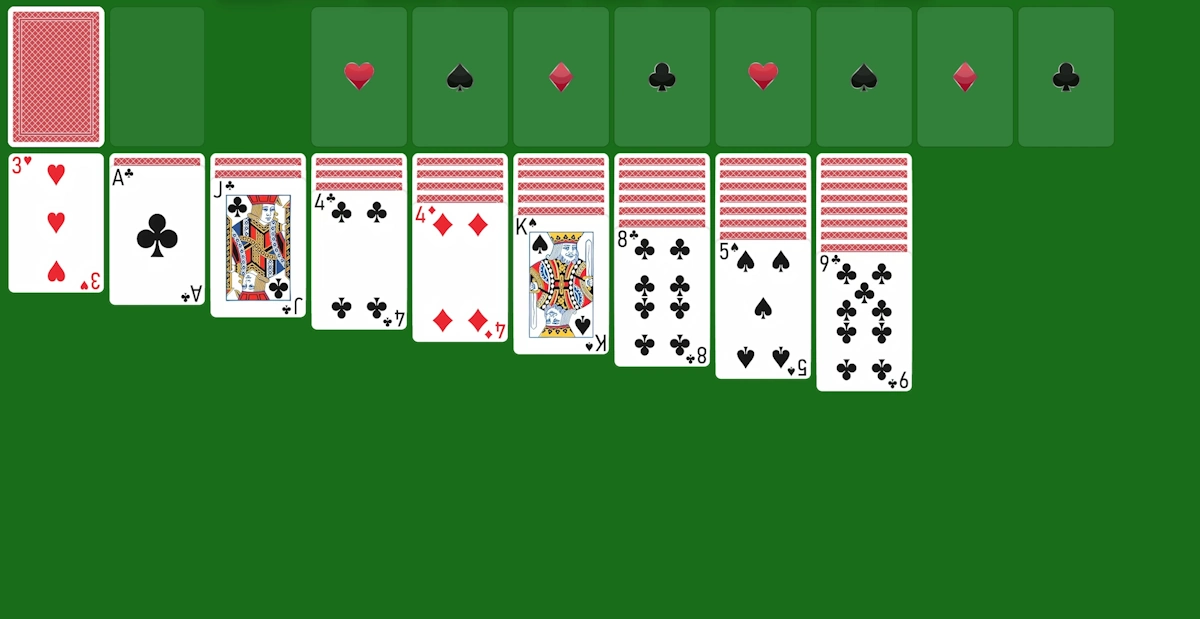
In the vast landscape of digital entertainment, few card games have withstood the test of time like spider solitaire. Despite innovations in graphics and online multiplayer, this solitary game continues to entrance thousands daily. However, what really keeps spider solitaire relevant after all these years? Why is it considered the gold standard for simple yet strategic diversions?
To solve this mystery, we must peer past surface and delve into the mechanics, psychology, and cultural significance that position spider solitaire above the rest. Underneath its ease lies a depth rarely found elsewhere in casual gaming.
The Anatomy of Spider Solitaire: Basic Rules, Profound Strategy
At first look, spider solitaire appears straightforward – build descending card sequences within each suit and clear completed runs. Cards can move regardless of suit but only suits finish. Additional cards come from the stockpile as progress is made, navigation is challenging with space and takes limited.
However, beneath accessibility lurks strategic complexity unique to spider solitaire. Unlike luck-reliant klondike, clever planning, patience and spatial reasoning are demanded to foresee moves. Short-term sacrifices must sometimes serve long-term achievement. Managing temporary stacks requires constant computation.
Designed for the Cognitive: Brain Benefits of Spider Solitaire
While casually played, spider solitaire exercises the brain’s most pivotal faculties. Science shows problem-solving and sequencing games can strengthen executive function, working memory, and flexibility of thought.
Each decision demands envisioning consequences, training minds to calculate possibilities. Strategizing a solution requires rational thinking on multiple tracks simultaneously. Thus, spider solitaire quietly hones abilities valuable for work and life.
Pattern recognition: Through repeated play, players innately learn advantageous sequences and dead ends, enhancing intuitive discernment.
Patience yields persistence: Unlike rapidly-paced games that reward reflexes, spider solitaire cultivates a more methodical methodology. It’s unsurprising that educators and therapists embrace its utilization to strengthen cognitive resilience in students and patients, as much as enthusiasts relish it for leisure.
A Legacy of Global Reach: How Spider Solitaire Became Ubiquitous
Spider solitaire’s ascendance to cultural prevalence was cemented with inclusion in Microsoft Windows, starting with ME and XP. Pre-installed yet negligible on resources, it promptly became an everyday work interruption worldwide wherever computers connected communities. Requirements of neither internet nor dexterity rendered it very attractive when digital technology newly entered lives.
This omnipresence matters. Easy entry is cornerstone for casual games’ success. Spider solitaire’s minimal obstacles combined with strategic depth created the perfect conditions for longevity.
Even today, spider solitaire variants rank among top mobile card games on Android and iOS. Modern editions offer customizable difficulties, timer-scored play, assistance, and daily challenges while preserving the core.
Intelligent Informal Gaming: What Sets Spider Solitaire Apart
The description “intelligent informal games” denotes titles simply exploring yet mentally stimulating. They balance relaxation and cognitive involvement. In this category, spider solitaire excels.
Consider factors elevating it above others:
No microtransactions or pay-to-win: Spider solitaire resists trends of monetizing common to mobile games. Success derives entirely from aptitude.
Self-contained gameplay sessions: Each round has a definite beginning, middle, and conclusion, offering rewarding closure within 10-30 minutes. Scalable difficulties: The choice to compete with one, two, or four card suits allows players to modulate challenge as per expertise and temper. Offline availability: Unlike numerous puzzle games reliant on internet connectivity, spider solitaire may be enjoyed anywhere at any time.
These features render spider solitaire an excellent choice for travelers, knowledge employees on breaks, or anyone seeking a mentally stimulating escape without committing to hours of gameplay. The psychology behind mastery: Why we keep coming back. Spider solitaire scratches an exceptional psychological itch. Whenever you succeed in a round particularly on the hardest setting you feel a sense of hard-earned proficiency. The fulfillment isn’t just about completing a job, but about overcoming an obstacle that mandated true ability and thoughtful planning. Unlike games reliant on arbitrary loot drops or endless level progression, spider solitaire offers a finite, solvable problem. This aligns with our innate motivation systems. Relating to self-determination theory, people are driven by a need for competence, autonomy, and belonging. Spider solitaire delivers on the first two:
Competence: You learn, adapt, and improve with each session.
Autonomy: You are given complete control without external restrictions artificially limiting your progress.
Additionally, no two games are identical, maintaining recurring interest. Experienced players continue discovering novel approaches, like capitalizing on vacant spaces or judiciously timing draws.
Spider Solitaire: An Oasis amid Digital Distraction
In an era saturated by alerts, social updates, and endless streams, spider solitaire offers singular concentration. It avoids demanding lightning reactions or multitasking. Instead, it invites immersing oneself fully in a self-contained puzzle’s slow, focused solving.
This proves invaluable now as digital fatigue grows increasingly problematic. Casual games cultivating mindfulness and contemplative thinking gain value. Spider solitaire comfortably fits this niche, providing a meditative experience rewarding strategizing.
Many mobile versions now come with dark modes, ambient audio, and minimal designs enhancing this soothing effect. It is more than a game; it offers temporary refuge.
Productive Tips for Purposeful Play
Whether seeking mental exercise or strategic honing as a card aficionado, spider solitaire has much to offer. Some practical recommendations to maximize each session:
Begin with two suits: Single suits are too basic, four too punishing for novices. Two suits strike the right balance.
Don’t rush stocking discards: Wait until clearing as many tableau columns as possible before adding new cards.
Capitalize on empty columns: These are your most potent tools. Employ them to temporarily hold cards and rearrange piles.
Practice pattern recognition: Study repeating sequences that pave the path to resolution or dead ends.
Log your metrics: Many tools permit tracking win rates, average turns, and actions taken. Refer to these to spot opportunities.
A Timeless Pastime in a Modern Era
Spider solitaire isn’t flashy, nor does it furnish cinematic cutscenes or enormous playable realms. Yet it remains one of digital gaming’s most popular across eras. Why? For it meets a core human yearning for structure, strife, and mastery all wrapped in a bundle perpetually replayable and mentally enriching.
Within smart casual gaming’s evolving domain, spider solitaire stands as a prototype of tasteful design. Its fusion of approachability, tactics, and psychological depth guarantees it will endure a benchmark for years ahead.
Thus the next time you possess some tranquil moments and a craving for something meaningful, don’t underestimate the power of a quality round of spider solitaire. It just may prove the smartest respite you seize all day.




Leave a comment