


Like any highly developed technical discipline or professional mind sport, competitive card games rely on a specialized language to describe specific actions, positions, and structural mechanics. For individuals studying the game from an academic, analytical, or informational perspective, understanding this vocabulary is absolutely essential. The use of standardized terminology ensures clear communication and precise documentation across international frameworks. This encyclopedic guide explores the fundamental 德州扑克术语, organizing the most critical industry vocabulary into functional categories for objective reference.
- Positional Terminology
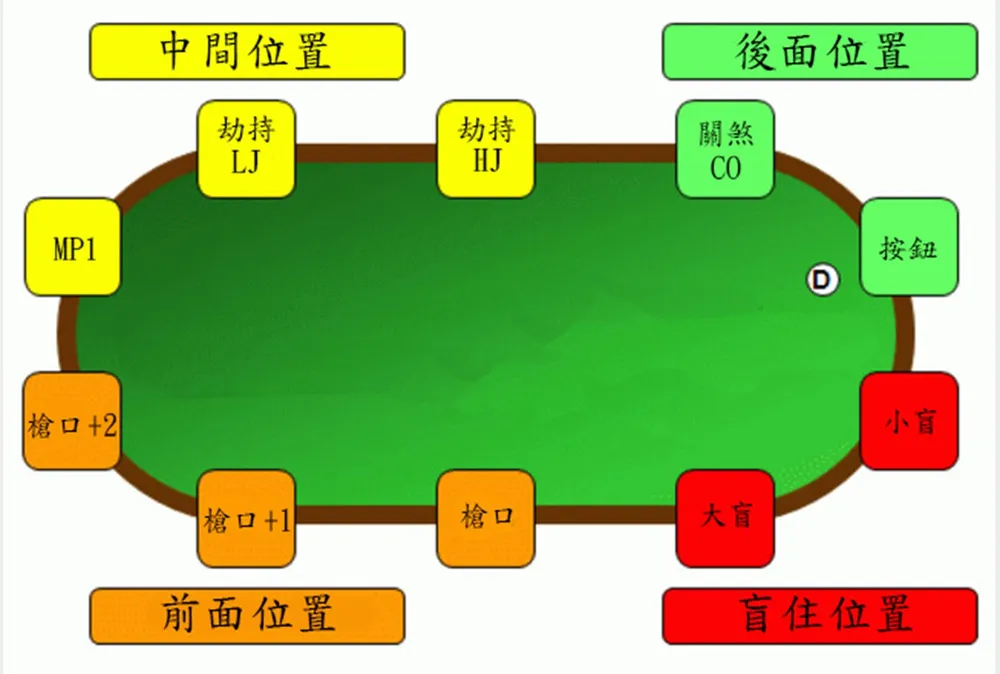
In the structural design of the game, a participant’s physical seat relative to the dealer button determines their order of action. Specific terms are used to identify these spatial relationships.
- The Button (Dealer Button): Represented by a physical disk on the table, this position determines the theoretical distribution point for each round. It represents the most advantageous seat in post-flop rounds because it acts last.
- The Blinds (Small Blind & Big Blind): The two forced positional contributions required before any cards are dealt. The Small Blind sits directly to the left of the Button, and the Big Blind sits directly to the left of the Small Blind.
- Under the Gun (UTG): The position sitting directly to the left of the Big Blind. This specific seat is required to act first during the initial pre-flop round of choices.
- Cutoff (CO) and Hijack (HJ): Late-position seats located directly to the right of the Dealer Button. These positions hold significant strategic value due to their late placement in the rotation order.
- Structural Round Terminology
The progression of a single standard game is divided into distinct stages, each marked by the introduction of new data to the table.
- Pre-Flop: The initial phase of the game where participants hold only their two hidden, private cards, and no community cards have been revealed.
- The Flop: The second stage of the round, where the dealer places the first three community cards face-up in the center of the table simultaneously.
- The Turn: The third stage of the round, featuring the introduction of a single, fourth community card.
- The River: The final stage of a round, where the fifth and last community card is placed face-up on the board.
- The Showdown: The ultimate phase of a completed round where remaining active individuals reveal their private cards to compare hand values based on international rules.
- Standard Action and Choice Terminology
During each sequential stage of a round, participants must select an action when the clockwise rotation reaches their position. The primary technical terms for these choices include:
- Check: An action where a participant declines to initiate a token unit increase but retains their private cards, passing the choice to the next individual in the rotation. This option is only available if no previous increase has occurred in that specific round.
- Call: Matching the exact value of the highest structural unit increase or forced contribution currently established on the table for that round.
- Raise: Increasing the current structural unit requirement for the round, forcing subsequent participants to either match the new higher amount or decline further participation.
- Fold: Relinquishing one’s private cards to the dealer and forfeiting all interest in the current round. An individual who folds cannot contribute further actions until the next deal begins.
- Card and Board State Terminology
Describing the state of the shared community cards and individual private combinations requires precise vocabulary within the standard system of 德州扑克术语.
- Hole Cards (Pocket Cards): The two initial private cards dealt face-down to an individual at the start of a round, completely hidden from other participants.
- Community Cards (The Board): The five shared cards placed face-up in the center of the table that any participant can use to construct their final five-card combination.
- Rainbow Board: A term used to describe a community card layout where three or four different card suits are present, making it mathematically impossible for any participant to form a Flush combination at that moment.
- The Kicker: An unpaired card held in a participant’s hand that does not directly form part of a ranked combination (such as a pair or three of a kind) but serves as a tie-breaker if two individuals hold combinations of identical value.
Conclusion: The Linguistic Framework of Mind Sports
Mastering the foundational 德州扑克术语 provides an objective look into the structural clarity of the game. Rather than relying on casual descriptions, the global community uses this exact vocabulary to record statistics, draft official rulebooks, and broadcast professional events with complete technical accuracy. By cataloging these terms, we can better understand how specific mechanics, positions, and phases interact to form a highly structured intellectual system.










Leave a comment